A combination of data types allows marketers to identify and build out the segment of ideal and high-value customers
Segmentation helps boost the value that marketing teams bring to an organization. I am a big fan of the trusted segmentation toolkit, but for most companies, it can do with a much-needed upgrade.
Growing your current database with high-value customer acquisition seems just the way to get there. A new form of segmentation and targeting can be found with the use of Customer Data Platforms (CDP). A combination of data types allows marketers to identify and build out the segment of ideal, high-value customers.
Moving away from "blunderbuss marketing" from the start
Look at the Pillars of Segmentation marketing segmentation framework for a minute and you will realize that your data is at the heart of all segmentation efforts. Purchase data is a good starting point to identify interesting groups. What your a good segmentation sets look like will differ from company to company, so they need a bit of Segment discovery (more about that later).
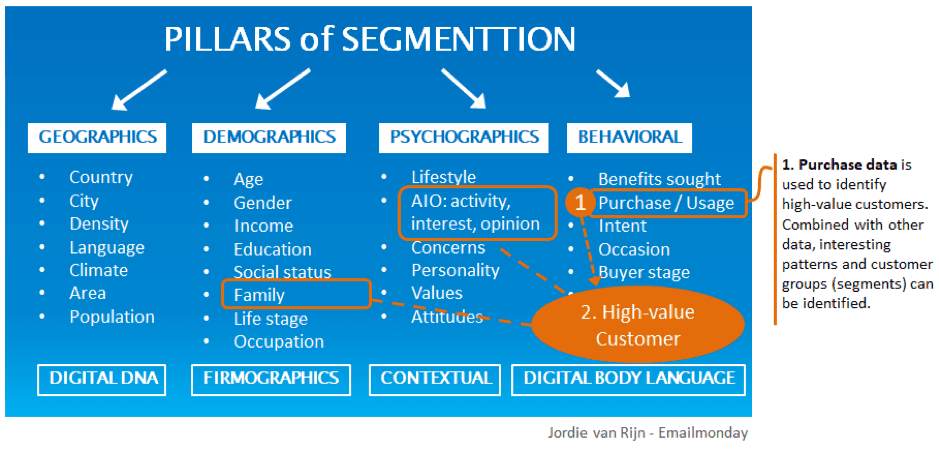
The typical use of marketing segmentation is to divide your customer file into several semi-static groups of customers with similarities and differentiate marketing communication to them. These groups or "segments" are the basis of your marketing segmentation.
But now imagine your marketing data to be more effective from day one. Especially for businesses with big customer databases, the returns of segmented messaging overshadows any non-targeted "blunderbuss marketing" method. Segmentation has a strong foothold in two main use-cases:
- Resonating Content: Play into the differences and buying reasons of your target groups so they "feel that it is for them", if well executed it is a form of resonating messaging; relevant, interesting and persuasive. This brings the kind of targeting and personalization that your customers are growing to expect in their messages. It is especially crucial in direct (one-to-one) channels like email marketing and in lead nurturing funnels.
- New customer acquisition: Through segmentation, companies are can put their budgets to more effective use and acquire more leads and customers from segments of ideal clients. Note that this doesn’t always mean different content but it does mean you are putting extra sophistication into the targeting because you know which will work best.
The ROI of newfound segmented customer sets
Realistically, not every single campaign can be completely individualized to the specific customer needs if you have too broad a mix of potential clients.
Take into consideration that the accessible segment (number of leads, potential clients that can be reached) must be sizable and profitable enough to validate the additional effort. This is where many companies "go wrong", they look only at their current base and forget the acquisition piece of it.
"Small segments in your database can represent big audiences outside of your current database."
It might seem like this is something only big companies need to do, but an added benefit of all of this data is the bigger insight into your customer base. Startups, scale-ups and small businesses can benefit as well, particularly to pinpoint the segments to go after when faced with scarce resources.
Discover your segmentation set and create the best customer view
Now we are left with the how. A strong example comes from Spyder Snow Gear, a US sports retailer. Overcoming Data and MarTech challenges with the help of a customer data platform to make the data accessible.
Every company has pockets of Ideal clients, the clients that you love to have and that love your products and services. Now imagine all of your customers are like that. Profitable, premium, the best customer you could wish for. Even if we could get a few more of these, it could make all the difference.
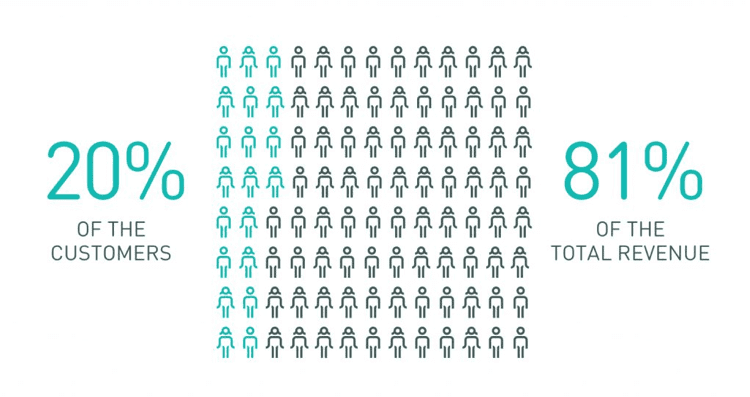
Seems great, but that is not where most businesses are at the moment. For most businesses, the Pareto principle (or 80/20 rule) is what today looks like. The top 20% of your file is likely to present 80% of revenue. Same story for Spyder, but with the twist that they could now identify the patterns in that 20%.
To identify the most profitable customer segments you need to combine the purchase and behavioral data available with the customer profile. It is extremely important not to let this go to waste.
Spyder built a "best customer view" and was able to derive high-value customer personas and their profiles, where they weren’t before. Think of it as a mix of segmentation, RFM and targeting to create identifiable acquisition personas.
According to the study, the new prospect acquisition tactics resulted in:
- Email list growth of 85%, while the Cost of Acquisition went down.
- Revenue increase of 94% from targeting in subsequent sales campaigns
- Content-focused EDMs generate 52% more revenue
Here are two (out of three) of their high value-customer segments:
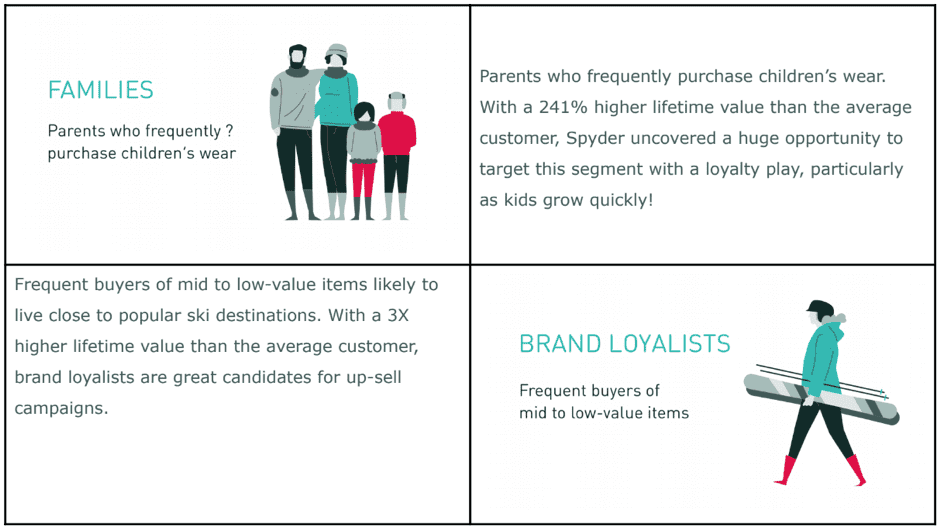
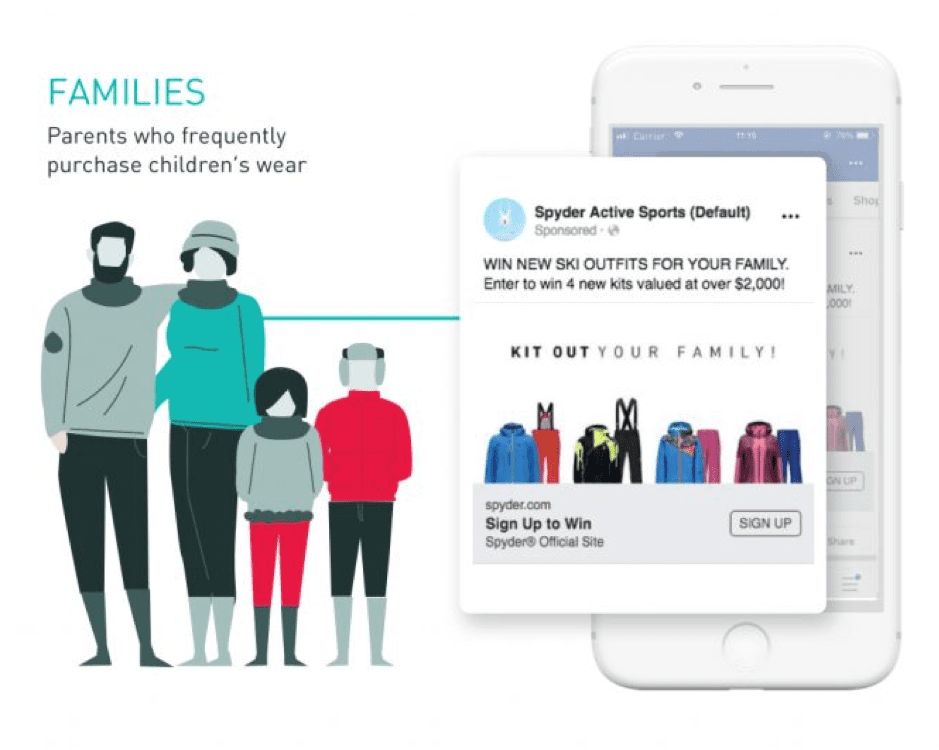
You can imagine the potential gains and probably also potential problems if these segments aren’t treated correctly. The acquisition campaign, in this case, is targeted through taking our seed list of most profitable clients and creating look-a-like audiences on Facebook. Each segment got a tailored prize draw competition in exchange for their details and an enriched opt-in. The real long-term value, of course, is in identifying the correct seed list(s) and follow-up sequences to refine after an initial win.
Get your structure in shape for the next step in Data Activation
The benefits of Data centralization are well documented and yet marketers aren’t doing it. Reasons for this tend to be quite similar, with tech, data or the prospect of extra work-load holding them back. But it doesn’t need to be like that. Smart marketers are employing segmentation for the right type of campaigns and in combination with keen MarTech.
Gathering and transforming customer data is the all-important step. Most marketers will agree that we are just at the beginning of what is possible. The technology to use customer data and predictive analytics will soon be at the point where a combination of understandable segmentation-driven campaigns will be augmented with programmatically driven (often black box) targeting that use even more of the data and independently learn what works for who.
In that mode, you can drive smaller and smaller selections on a bigger scale - and identify the opportunities that our own logic could never. The smart marketers today are the citizen data scientists of tomorrow and something to prepare your MarTech infrastructure for.
A great customer segmentation/acquisition campaign is a beautiful use-case for bringing together your data and starting with more refined analytics.